

St. Peter's Basilica Dress Code
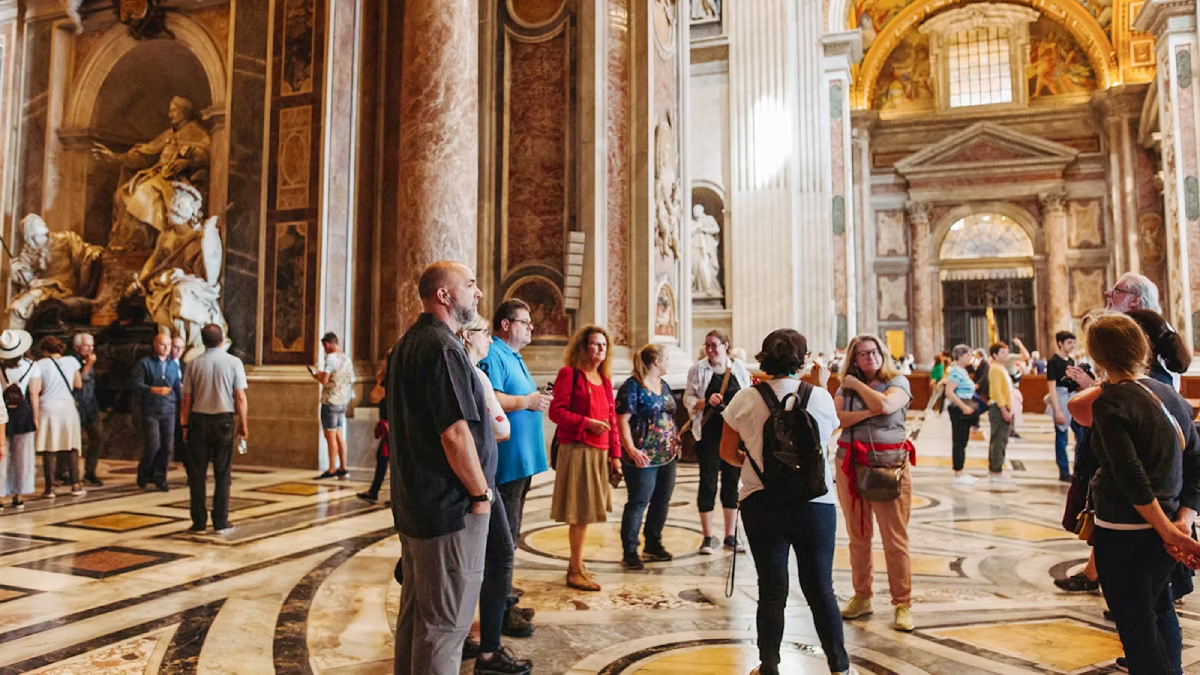
To enter St. Peter’s Basilica, both men and women must have shoulders covered and knees covered. Sleeveless tops, tank tops, shorts above the knee, miniskirts, and low-cut garments are all forbidden. The rule is strictly enforced at security — visitors who do not comply are turned away and must change before re-entering. Hats must be removed by men on entry; women may wear modest hats. Children follow the same rules as adults.
The dress code at St. Peter’s Basilica is the most consistently enforced of any tourist site in Rome. Unlike many Italian churches where the rules are posted but ignored, the security guards at the basilica’s entrance checkpoint actively turn visitors away for non-compliance every single day. Getting it wrong means rejoining the queue after you’ve changed — which in peak season can cost another 60–90 minutes. This guide tells you exactly what to wear, what not to wear, and what to do if you arrive and realise your outfit does not comply.
The Two Core Rules
The dress code at St. Peter’s Basilica comes down to two non-negotiable requirements that apply to every visitor regardless of age, nationality, or reason for visiting:
1. Shoulders must be covered. This means no sleeveless tops, tank tops, spaghetti-strap tops, strapless dresses, or crop tops. Short-sleeved tops and shirts are acceptable — the key word is “sleeveless.” If your top does not have sleeves that cover at least the top of the shoulder, it will not pass.
2. Knees must be covered. Shorts above the knee, miniskirts, and short dresses are not permitted. The hemline must reach at least to the knee — not above it. Capri trousers, which end mid-calf, are acceptable. Knee-length shorts are technically allowed but carry more risk of scrutiny than full-length trousers.
These rules apply equally to men, women, and children. There are no exceptions based on weather, heat, nationality, or the nature of your visit.
All visitors to St. Peter’s Basilica must have shoulders and knees covered. Sleeveless tops, shorts above the knee, miniskirts, and low-cut garments are forbidden. The rule applies to men, women, and children equally and is enforced at the security checkpoint. Visitors who do not comply are turned away until they change.
What Is and Is Not Allowed — Full List
Allowed
- T-shirts and short-sleeved tops (provided shoulders are covered)
- Long trousers and jeans (including denim, provided they are not excessively ripped or distressed)
- Knee-length or longer skirts and dresses
- Capri trousers (mid-calf length)
- Linen trousers and lightweight summer shirts
- Light scarves, shawls, or sarongs used to cover shoulders or knees
- Trainers, flat shoes, and sandals (though flip-flops are not recommended for the dome climb due to the uneven stone surfaces)
- Modest hats for women
- Sunglasses (to be removed inside as a courtesy, though not strictly enforced)
Not Allowed
- Sleeveless tops and tank tops
- Strapless or spaghetti-strap tops and dresses
- Crop tops
- Shorts above the knee (note: even at the knee is borderline — below the knee is safer)
- Miniskirts and short dresses
- Low-cut clothing
- Hats for men (must be removed on entry)
- Clothing with offensive slogans, symbols, or imagery
- Tattoos that are offensive to Catholic morality or decency must be covered
On Shorts: A Practical Note
The dress code technically permits shorts for both men and women provided they cover the knee. However, in practice, guards have historically been stricter about men in shorts than women — with reports of men being turned away in shorts that clearly covered the knee, while women in similar garments were admitted. To eliminate any risk, men planning to visit the basilica should wear full-length trousers rather than shorts.
For women, knee-length or just-below-the-knee shorts are generally fine, but a skirt or light trousers are a safer choice if you want to avoid any uncertainty at the gate.
On Leggings
Leggings on their own do not satisfy the dress code — they are considered too form-fitting. However, leggings worn under a long tunic, dress, or top that fully covers the hips and upper thighs are acceptable. The principle is that the leggings serve as an undergarment rather than as standalone trousers.
What to Do if You Are Not Dressed Correctly
If you arrive at security in clothing that does not meet the requirements, the guard will ask you to step aside. You have two options:
Option 1 — Change your clothing. Street vendors near the colonnade and small shops around St. Peter’s Square sell scarves, pashminas, and lightweight sarongs specifically for this purpose, typically for €5–15. A scarf large enough to wrap around your shoulders, or tied around your waist to cover a short skirt, is sufficient. Some visitors simply wrap themselves in a scarf purchased outside and pass through without issue.
Option 2 — Return to your accommodation and change. If you are staying nearby, this may take 30–60 minutes. If you are on the other side of Rome, this is not practical — the scarf solution is better in that case.
The basilica does not provide cover-ups at the entrance. Unlike some other Vatican sites that offer disposable paper coverings, St. Peter’s Basilica relies on visitors arriving appropriately dressed or sourcing their own cover-ups outside.
Important: If you have a reserved entry ticket or guided tour, being turned away for dress code means your time slot may pass while you are sourcing appropriate clothing. Arrive dressed correctly, or carry a scarf in your bag as insurance.
Dress Code Tips for Hot Weather
Visiting Rome in summer (June–August) with the dress code in mind requires some planning, as temperatures regularly reach 30–35°C. Here are the most practical approaches:
Lightweight linen or cotton trousers: The single best choice for summer. Linen trousers breathe well, dry quickly, and satisfy the knee-coverage requirement without causing discomfort. Many shops around Termini and throughout central Rome sell inexpensive linen trousers specifically for this kind of visit.
Light knee-length or below-the-knee dress: A loose, breathable cotton or linen dress that covers the shoulders is perhaps the most comfortable summer option for women — it meets both dress code requirements while allowing air circulation.
Carry a scarf: If you plan to wear sleeveless clothing for the rest of your Rome day, pack a lightweight scarf to put over your shoulders for the basilica visit. A pashmina, a large cotton scarf, or even a light long-sleeved shirt tied around your shoulders works perfectly.
The tip-to-toe principle: Think about your visit as requiring a top that has sleeves and a bottom that reaches the knee. Everything else — shoe type, colour, formality level — is entirely up to you.
Dress Code for Children
Children are subject to the same dress code rules as adults. For summer visits, appropriate options include lightweight trousers for boys, and knee-length dresses or long shorts for girls. Baby-wearing and carry options for very young children are fine. Strollers must be left at the stroller storage area in the basilica portico — the basilica’s own FAQ confirms that strollers can be stored there and visitors proceed to the Welcome Desk from the Vatican Grottoes entrance.
Does the Same Dress Code Apply to the Vatican Museums?
Yes. The same shoulders-and-knees rule applies throughout Vatican City, including the Vatican Museums and Sistine Chapel. The Vatican Museums also specifically prohibit hats for all visitors (not just men), and have stricter rules about bag sizes. If you are visiting both the Museums and the Basilica on the same day, dressing correctly for one means dressing correctly for both.
The Purpose Behind the Rule
St. Peter’s Basilica is a functioning Catholic church before it is a tourist attraction. It hosts multiple Masses every day, serves as a pilgrimage destination for millions of Catholics worldwide, and is the site of some of the most significant religious ceremonies in Christianity. The dress code exists to maintain the dignity and sacred character of the space — not as an arbitrary inconvenience, but as a genuine request for respect toward those who come to pray.
Frequently Asked Questions
Do I need to cover my shoulders at St. Peter’s Basilica?
Yes, without exception. Sleeveless tops, tank tops, and strapless clothing are not permitted. Both men and women must have their shoulders covered.
Can I wear shorts to St. Peter’s Basilica?
Technically yes, if they cover the knee. However, guards apply the rule more strictly to men than women in practice, and men in shorts — even knee-length ones — risk being turned away. Full-length trousers are the safe option for men.
Can I wear a dress to St. Peter’s Basilica?
Yes, provided it covers the shoulders (has sleeves) and reaches at least to the knee. Sleeveless dresses require a scarf or shawl over the shoulders.
Are jeans allowed?
Yes. Standard jeans are perfectly acceptable, provided they are not excessively ripped or distressed.
Can I wear a hat inside?
Women may wear modest hats inside the basilica. Men must remove their hats before entering — this is a traditional Catholic church protocol.
What if my clothing has a small logo or print on it?
Standard logos and prints are fine. What is not permitted is clothing with offensive text, symbols, or imagery that could be considered disrespectful to Catholic morality.
Are tattoos an issue?
Standard decorative tattoos are generally not a problem. Tattoos that feature offensive, anti-religious, or sexually explicit imagery should be covered. Guards have discretion over what they consider offensive.
Can I buy something to cover up near the basilica?
Yes. Vendors near the colonnade and small shops around Piazza San Pietro sell scarves and wraps specifically for this purpose. Prices typically range from €5 to €15.
Does the dress code apply to the Vatican Grottoes?
Yes. The Vatican Grottoes are accessed from inside the basilica, and the same dress code applies throughout the complex.
Is the dress code enforced if I arrive with a guided tour?
Yes. No ticket, tour, or booking of any kind exempts visitors from the dress code. Your guide cannot override the security checkpoint.
